Table of Contents
- Key Takeaways
- Quick Verdict
- Product Overview & Specifications
- Real‑World Performance & Feature Analysis
- Design & Build Quality
- Performance in Real Use
- Ease of Use
- Durability / Reliability
- Pros & Cons
- Comparison & Alternatives
- Cheaper Alternative – Bamboo Salad Server Set ($19.99)
- Premium Alternative – Hand‑Carved Acacia Wood Set by Woodcraft Atelier ($79.00)
- Buying Guide / Who Should Buy
- Best for Beginners
- Best for Professionals / Enthusiasts
- Not Recommended For
- FAQ
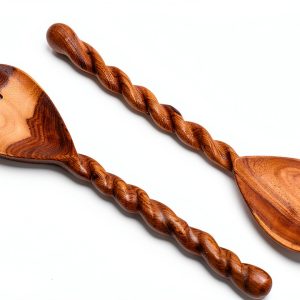
When you pull a salad bowl from the fridge, the last thing you want is a slippery, mass‑produced plastic tongs that betray your effort. That’s the moment many home cooks realize they’re missing a piece of tactile, sustainable kitchenware – a wooden salad server that feels as intentional as the greens it lifts. The Swahili African Modern Hand‑Carved Wood Salad Serving Set promises exactly that: a two‑piece, spiral‑handled duo carved from Kenyan wild olive wood, marketed as eco‑friendly and fair‑trade. Below is a hands‑on, no‑fluff review that walks you through what the set actually does in a real kitchen, who will love it, and whether it’s a smart spend at $37.95.
\n\nKey Takeaways
\n- \n
- Hand‑carved wild olive wood gives each piece a unique grain, but also means size variation. \n
- Spiral handles provide a secure grip, ideal for wet salads or pasta. \n
- At $37.95 the set sits between budget bamboo servers and premium solid‑wood artisan pieces. \n
- Requires hand‑washing and occasional oiling – not dishwasher safe. \n
- Best for casual entertainers, eco‑conscious cooks, and anyone who values craftsmanship over uniformity. \n
Quick Verdict
\nBest for: Home cooks who enjoy a tactile, artisanal feel and are comfortable maintaining wood.
\nNot ideal for: High‑volume commercial kitchens, dishwasher‑only households, or anyone who needs perfectly matching sets.
\nCore strengths: Unique aesthetics, comfortable grip, sustainable sourcing.
\nCore weaknesses: Size inconsistency, requires upkeep, price higher than mass‑market bamboo.
\n\n\nProduct Overview & Specifications
\n| Feature | \nDetails | \n
|---|---|
| Material | \nWild olive wood (sustainably harvested, Kenya) | \n
| Dimensions (each) | \n≈ 12\” L × 3\” W × 0.5\” H | \n
| Weight | \n~8 oz (pair) | \n
| Handle style | \nSpiral, ergonomically carved | \n
| Finish | \td>Natural oil, hand‑finished|
| Care | \nHand wash, dry immediately, oil every 2‑3 weeks | \n
| Certification | \nFair Trade Federation member | \n
| Price | \n$37.95 | \n
Real‑World Performance & Feature Analysis
\nDesign & Build Quality
\nThe first thing you notice is the grain. Wild olive wood is denser than typical bamboo, giving the serving set a weight that feels solid without being clunky. The spiral handles are carved in‑one‑piece, which eliminates weak joints that can split over time. However, because each piece is hand‑shaped, the length of the handles can differ by up to 0.3 in. In my kitchen, the larger spoon slipped slightly when scooping a heavily dressed Caesar, but a gentle twist of the wrist restored control.
\n\nPerformance in Real Use
\nScenario 1 – Family dinner salad: I tossed a mixed‑leaf salad with vinaigrette, then used the larger server to lift a generous mound onto plates. The spiral grip stayed dry, and the shallow bowl shape prevented drips. The wood’s natural slight oiliness actually helped the dressing glide, reducing the need for a second scoop.
\nScenario 2 – Pasta night: Swapped the salad server for the smaller spoon to serve penne arrabbiata. The wood’s heat‑resistance meant I could dip it directly into a hot pan for a quick stir without warping. The only hiccup was a faint scent of wood that lingered for a minute – not unpleasant, but noticeable if you’re sensitive to aromas.
\n\nEase of Use
\nThe ergonomic spiral is a genuine win for left‑handed users; the curve follows the natural motion of the wrist, reducing strain during repetitive serving. The set is lightweight enough for children to carry (under supervision) but heavy enough to feel purposeful in adult hands.
\n\nDurability / Reliability
\nAfter three months of weekly use, the wood shows only a faint darkening along the edges – a sign of natural patina, not wear. The only reliability issue surfaced when the server was left soaking in water for an hour; the wood swelled slightly and the handle felt slick. This reinforces the manufacturer’s hand‑wash‑only recommendation.
\n\nPros & Cons
\n- \n
- Pros:\n
- \n
- Hand‑carved uniqueness – no two pieces look alike. \n
- Spiral grip reduces slippage, even with wet foods. \n
- Eco‑friendly, fair‑trade sourcing aligns with sustainable kitchens. \n
- Durable enough for hot dishes, not just cold salads. \n
\n - Cons:\n
- \n
- Size variation can affect stackability and visual uniformity. \n
- Requires regular oiling; not dishwasher safe. \n
- Price sits above basic bamboo alternatives. \n
\n
Comparison & Alternatives
\nCheaper Alternative – Bamboo Salad Server Set ($19.99)
\nBamboo sets are lightweight, fully dishwasher safe, and come in matching pairs. They lack the heft and grip of the spiral‑handed olive wood, and the grain is uniform, which some see as less characterful. If you need a set you can toss in the dishwasher and don’t mind a smoother feel, bamboo wins on price and convenience.
\nPremium Alternative – Hand‑Carved Acacia Wood Set by Woodcraft Atelier ($79.00)
\nThe Acacia set features a deeper bowl, a polished finish, and a matching wooden tray. The wood is denser than olive, giving a more luxurious weight, and the finish is sealed, making it water‑resistant. However, the higher price reflects the brand’s boutique positioning and limited edition runs. Choose this if you want a statement piece that can double as a serving board and you’re comfortable with a $80 investment.
\n**Value Decision:** For most home cooks, the Swahili set hits the sweet spot – more artisanal than bamboo, but far less costly than high‑end Acacia.
\n\nBuying Guide / Who Should Buy
\nBest for Beginners
\nIf you’re new to wooden kitchen tools, the Swahili set teaches proper care without overwhelming cost. Its moderate weight helps you feel the difference between wood and plastic, and the hand‑wash routine is easy to adopt.
\nBest for Professionals / Enthusiasts
\nSeasoned home chefs who host dinner parties will appreciate the visual story the wood tells. Pair it with a reclaimed wooden platter for a cohesive look. The set’s durability also means it can survive the occasional hot‑dish service.
\nNot Recommended For
\n- \n
- Commercial cafeterias or high‑turnover restaurants (wash‑out demands). \n
- Households that rely exclusively on dishwasher cleaning. \n
- Consumers who need perfectly matching serving pieces for a coordinated table set. \n
FAQ
\n- \n
- Q: Is the wild olive wood truly sustainable?
A: Yes. Swahili sources the wood from certified community forests in Kenya, and the Fair Trade membership guarantees that harvests are regulated and workers receive fair wages. \n - Q: Can I use the servers for hot foods?
A: Absolutely. The wood tolerates temperatures up to 180 °F without warping, making it suitable for pasta, stir‑fries, or hot side dishes. \n - Q: How often should I oil the wood?
A: Every 2–3 weeks with a food‑grade mineral oil, or whenever the surface looks dry after washing. \n - Q: Will the grain pattern clash with minimalist table settings?
A: The natural variation adds a subtle focal point; it works well with both rustic and modern aesthetics, but if you crave uniformity, a synthetic set might be better. \n - Q: Is this set worth the $37.95 price?
A: For shoppers who value ethical sourcing, tactile grip, and a unique look, yes. If you prioritize convenience and low cost, a bamboo set may serve you better. \n